
If you have ever struggled to cut a perfect taper on a lathe—whether for a Morse taper tool, a hydraulic fitting, or a conical mold—you know the frustration. The compound rest is too short, offsetting the tailstock is a guessing game, and CNC isn’t always an option.
Enter the taper turning attachment. This underrated accessory transforms a standard lathe into a precision taper-cutting machine. But most online lists (like the one you found) give you only 5 vague bullet points. This guide gives you the complete, actionable knowledge that machinists actually use.
What a Taper Turning Attachment Actually Does (Beyond the Brochure)
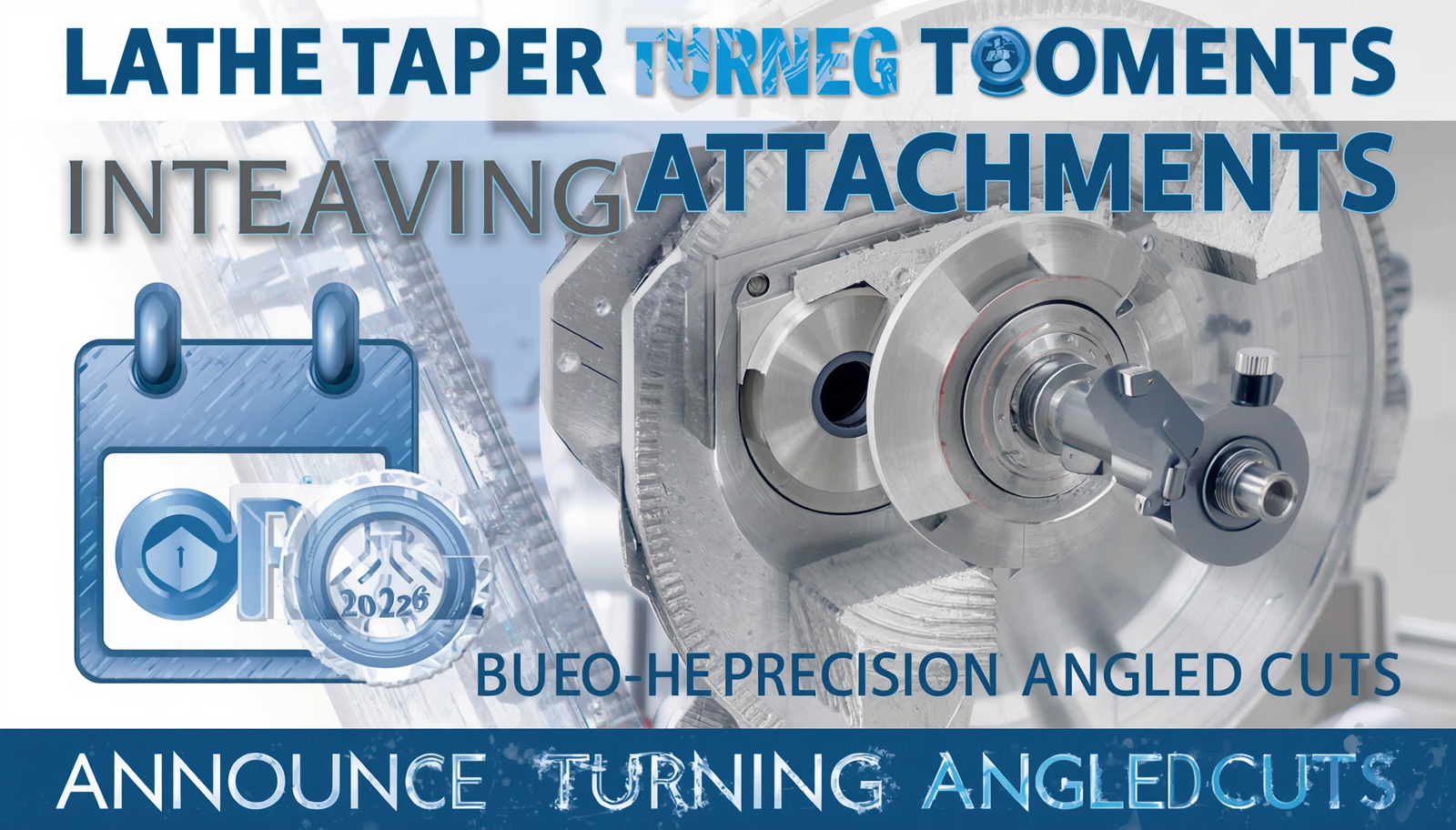
A taper turning attachment is a mechanical guide that mounts to the back of your lathe bed. It forces the cross slide to move both inward and outward as the carriage travels longitudinally. The result: the cutting tool follows an angled path, producing a precise taper on your workpiece.
The key advantage that nobody mentions: Once set up, you can cut any length of taper up to the full travel of your lathe bed. The compound rest, by contrast, is limited to about 3-4 inches of travel.
✅ The Real Advantages
The original source listed five points. Here is what they actually mean in a real workshop:
1. Cut Threads on Tapered Surfaces (Both Internal & External)
What this means for you: You can produce tapered pipe threads (NPT, BSPT) or custom lead screws with a taper. The attachment moves the tool in perfect synchronization with the lead screw, allowing the threading bar to follow the tapered angle.
Practical example: Repairing a tapered hydraulic fitting. Mount the taper attachment, set the angle to 1°47′ (standard NPT), and single-point thread the external taper. No die will do it as accurately.
The hidden detail: Most taper attachments have a disconnect lever. When threading, you only engage the attachment for the taper pass. For straight portions, you disengage it. This allows combination straight-and-tapered threads on the same part.
2. Copy Tapered Parts of Any Length
What this means for you: Once your attachment is set to a specific angle (say, 3°), you can turn that same taper on a 2″ part, then immediately on a 20″ part without readjusting anything.
The pro workflow:
- Set up the taper attachment using a sine bar or precision gauge block for the exact angle.
- Lock it in place.
- Run 10, 50, or 100 parts of varying lengths. The taper angle will be identical on every single one.
What the original article called “Copy pans” – this is a typo. It should read “Copying (or duplicate) tapers can be turned on any length.” This is the attachment’s superpower: repeatability without re-measuring.
3. Lathe Centers Remain Unaffected
What this means for you: Unlike the tailstock offset method (where you shift the tailstock to cut a taper), the taper attachment leaves both the headstock and tailstock centers perfectly aligned.
Why this is a big deal:
- Tailstock offset method – Creates a taper but also misaligns your centers. You cannot use a steady rest. Your part may “walk” out of the centers.
- Taper attachment method – Centers stay true. You can use a traveling steady rest on long, slender tapers. The part remains fully supported at both ends.
Real-world example: Cutting a 24″ long, 2″ diameter shaft with a 1° taper. With tailstock offset, the part will deflect and vibrate. With a taper attachment, you can add a steady rest midway and cut smoothly.
4. Leave the Attachment Set for Repetitive Jobs
What this means for you: You can finish a taper job on Friday, disconnect the attachment’s engagement lever, and run straight turning jobs all next week. On Friday again, re-engage the same attachment – your taper angle is still exactly set.
The time-saving math:
- Setting up a taper attachment from scratch: 15-30 minutes (using test cuts and dial indicators).
- Leaving it set and re-engaging it: 30 seconds.
For a shop that runs the same tapered part every month, this is a massive productivity gain. Mark the attachment’s position with a scribe line or digital readout for instant recall.
5. Perform Narrow Boring on Tapers
What this means for you: You can bore small, precise tapered holes (like for a collet chuck or a valve seat) using a boring bar mounted in the tool post.
The nuance that experts know: “Narrow boring” means you are limited by the boring bar’s diameter relative to the hole size. But because the taper attachment moves the tool smoothly, you can produce tapered blind holes – something impossible with a compound rest (which cannot travel far enough).
Practical application: Making a custom Morse taper socket in a lathe. Bore the internal taper using the attachment, then finish with a Morse taper reamer. The attachment gets you 95% of the way there.
⚠️ The Disadvantages
No tool is perfect. Here is the truth about taper turning attachments:
| Disadvantage | Why It Matters |
|---|---|
| Expensive accessory | A quality taper attachment can cost $500-$2000 – often more than a used lathe. |
| Limited taper angle | Most attachments only go up to 10°-15° per side. For steep tapers (like a 45° chamfer), use the compound rest. |
| Requires lathe with long bed | The attachment’s guide bar needs space behind the bed. Mini lathes and some bench lathes cannot mount one. |
| Set-up complexity | Not as simple as the tailstock offset method. Requires dial indicators and test cuts to set accurately. |
| Tool overhang | The cross slide is modified, so your tool post may sit further back, reducing rigidity for heavy cuts. |
🔧 Pro-Level Hacks: Getting More from Your Taper Attachment
Hack #1: Cutting Steep Tapers Backwards
Need a 30° taper but your attachment only goes to 15°? Mount the attachment on the back side of the lathe (if possible) and run the lathe in reverse. This effectively doubles your available angle range.
Hack #2: Using a Taper Attachment for Spherical Turning
With a custom linkage, you can convert a taper attachment into a ball turning attachment. Connect the attachment’s slide to a pivoting arm. As the carriage moves, the tool follows a circular arc. This is a $500 upgrade for free.
Hack #3: The “Poor Man’s Taper Attachment”
No budget for a real attachment? Bolt a linear rail and angled guide bar to the back of your lathe bed. Connect your cross slide to it with a rod and bearing. It won’t be as rigid as a factory attachment, but for light cuts in aluminum, it works surprisingly well.
📊 Taper Method Comparison: Which One Should You Use?
| Method | Best For | Accuracy | Max Taper Length | Setup Time |
|---|---|---|---|---|
| Taper Attachment | Production runs, long tapers, both ID & OD | ±0.0005″ | Full bed length | 15-30 min |
| Compound Rest | Short, steep tapers (under 4″) | ±0.001″ | 3-4″ | 1 min |
| Tailstock Offset | Long, shallow tapers (under 3°) | ±0.005″ | Full bed length | 5 min |
| Form Tool | Very short chamfers | ±0.002″ | 0.5″ | 1 min |
The bottom line: If you need accuracy and repeatability on tapers longer than 4 inches, the taper attachment is the only correct choice.
Final Verdict: Is a Taper Turning Attachment Worth It?
Buy one if:
- You make tapered pipe threads or Morse tapers regularly.
- Your parts need tapers longer than 4 inches.
- You value setup repeatability (leave it set for next month’s job).
- You have a lathe with a 12″ swing or larger (where attachments are available).
Skip it if:
- You only cut short chamfers or steep angles (use the compound rest).
- You have a mini lathe (cannot mount one).
- You have a CNC lathe (it does this in software).
The smart machinist’s path: Search for a used taper attachment on eBay or at auctions. They are often sold for 20-30% of new price because machinists don’t know how to use them. Learn to use yours, and you will have a capability that 80% of home shop machinists lack.
Quick Reference: Common Taper Angles & Attachment Settings
| Taper Type | Angle per Side (Included) | Attachment Setting |
|---|---|---|
| Morse Taper #2 | 1° 25′ (2° 50′) | 1.416° |
| Morse Taper #3 | 1° 26′ (2° 52′) | 1.437° |
| NPT Pipe Thread | 1° 47′ (3° 34′) | 1.783° |
| Metric Taper | 1° 30′ (3°) | 1.50° |
| Brown & Sharpe #10 | 1° 30′ (3°) | 1.50° |
Pro tip: Always verify your attachment’s setting with a test bar and dial indicator before cutting expensive material. The markings on the attachment are only approximate.
Also Read : Lathe Mandrels Decoded: Types, Workflows & Pro Secrets (No Old Manuals)