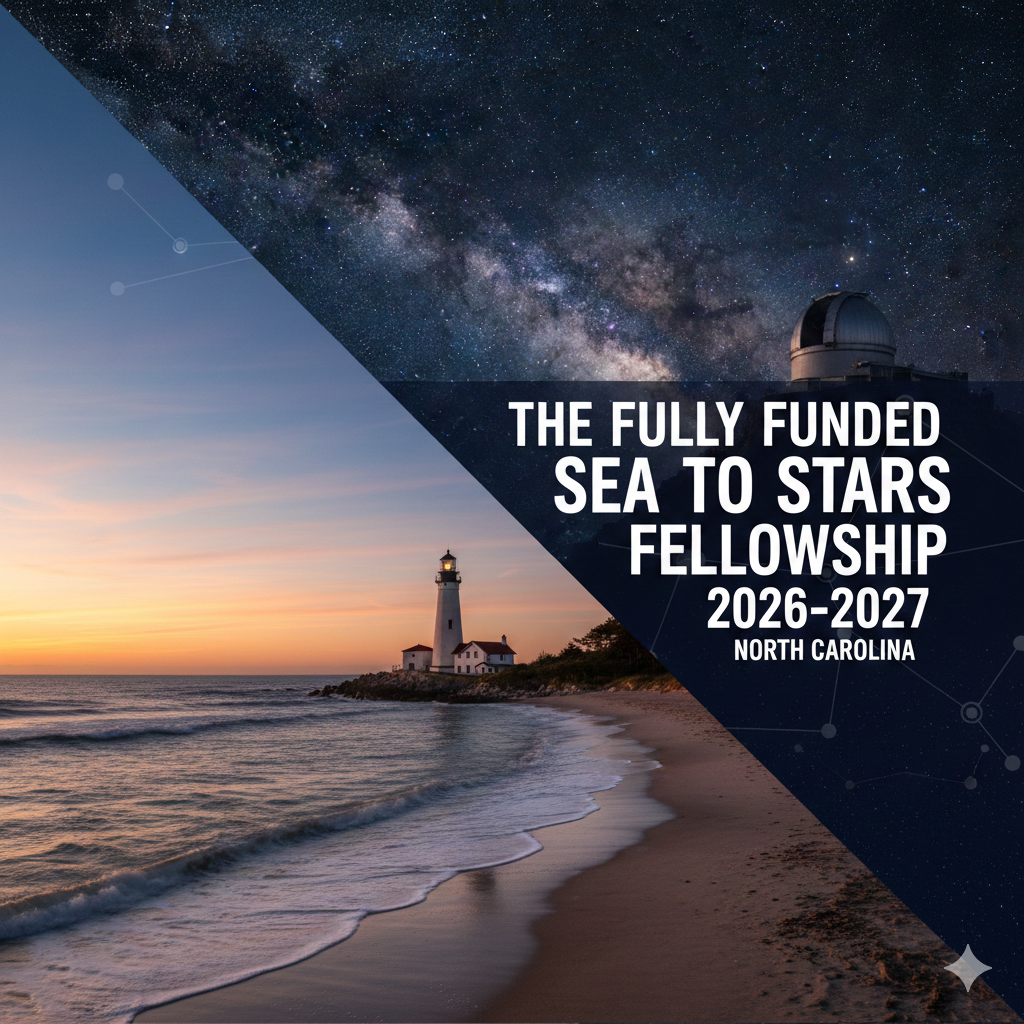
Sea To Stars Fellowship 2026-2027: Fund Your Coastal & Space-Driven Research in North Carolina
Are you an ambitious researcher or a postgraduate student with a groundbreaking idea that bridges the gap between our oceans and the cosmos? The Sea To Stars Fellowship 2026-2027 is your chance to turn that vision into reality. This unique, fully funded program, based in the research-rich environment of North Carolina, is now accepting applications for its next cohort.
This isn’t just another scholarship; it’s a launchpad for the next generation of interdisciplinary scientists. Whether your passion lies in marine biology, coastal geology, astrophysics, aerospace engineering, or climate science, the Sea To Stars Fellowship offers the resources, mentorship, and platform to propel your career to new heights.
In this comprehensive guide, we’ll cover everything you need to know about the Sea To Stars Fellowship 2026-2027, including its benefits, eligibility criteria, application process, and tips for crafting a winning proposal.
What is the Sea To Stars Fellowship?
The Sea To Stars Fellowship is a prestigious, fully funded program designed to support innovative research that connects coastal and space-driven sciences. It recognizes that the challenges and discoveries of the future lie at the intersection of disciplines. Hosted by leading research institutions in North Carolina—a state known for its diverse coastline (the “Sea”) and its growing aerospace and technology hubs (the “Stars”)—the fellowship provides an unparalleled environment for academic and professional growth.
Fellows are not just funded; they become part of a vibrant community of scholars, with access to state-of-the-art laboratories, field sites along the Atlantic coast, and connections to industry leaders in the Research Triangle Park and beyond.
Why North Carolina? The Perfect Backdrop for Your Research
North Carolina offers a unique geographical and intellectual landscape that makes it the ideal home for the Sea To Stars Fellowship.
- The “Sea”: The state’s 300 miles of coastline, including the Outer Banks and the sprawling Pamlico Sound, offer a natural laboratory for studying coastal dynamics, marine ecosystems, sea-level rise, and estuarine processes.
- The “Stars”: From the aerospace engineering programs at NC State University and UNC Chapel Hill to the presence of NASA partners and a thriving commercial space sector, North Carolina is a rising star in space-related research and technology.
- The Synergy: This combination allows for groundbreaking research that might explore how coastal ecosystems can be studied from space, how extreme environments on Earth mimic those on other planets, or how satellite technology can monitor and protect our coastlines.
Key Benefits of the Sea To Stars Fellowship 2026-2027
This is a fully funded opportunity, meaning it covers all major expenses, allowing you to focus entirely on your research.
- Generous Stipend: A competitive annual stipend to cover your living expenses, ensuring you can live comfortably in North Carolina.
- Full Tuition Coverage: Complete coverage of tuition and mandatory university fees for the duration of the fellowship (typically 2-3 years).
- Generous Research Budget: A dedicated fund for your project, covering equipment, travel to field sites, conference attendance, and publication costs.
- Mentorship from World-Class Faculty: You will be paired with leading professors and researchers from partner universities who will guide your project and career development.
- Professional Development: Access to specialized workshops, seminars, and networking events designed to build skills in science communication, grant writing, and leadership.
- Interdisciplinary Community: Join a cohort of like-minded fellows working at the intersection of coastal and space sciences, fostering collaboration that lasts a lifetime.
Who Should Apply? Eligibility Criteria
The fellowship seeks candidates with a strong academic background and a clear vision for interdisciplinary research. While specific requirements can vary, general eligibility includes:
- Educational Background: Applicants should have a Bachelor’s or Master’s degree in a relevant field such as Marine Science, Coastal Engineering, Geology, Physics, Astronomy, Aerospace Engineering, Environmental Science, or related disciplines.
- Research Proposal: A compelling and well-defined research proposal that explicitly bridges the “Sea” and “Stars” themes. This is the most critical part of your application.
- Academic Excellence: A strong academic record demonstrating your capability to undertake rigorous research.
- Language Proficiency: Proficiency in English, typically proven through TOEFL or IELTS scores for non-native speakers.
- Admission to a Partner University: The fellowship is typically tied to admission to a graduate program (Masters or PhD) at one of the participating universities in North Carolina.
How to Apply for the Sea To Stars Fellowship 2026-2027
The application process is comprehensive and selective. It’s crucial to start early and prepare each component carefully. Here is a step-by-step guide:
- Identify Your Research Area: Before anything else, refine your research idea. How does it connect the coast to space? What specific question will you answer?
- Find a Potential Mentor: Explore the faculty profiles at the partner institutions (e.g., Duke University, UNC Chapel Hill, NC State University, UNC Wilmington). Identify professors whose expertise aligns with your project. Reaching out to them informally before applying is highly recommended.
- Prepare Your Application Documents: This usually includes:
- Online Application Form: Basic personal and academic information.
- Curriculum Vitae (CV): Detailed overview of your education, experience, publications, and skills.
- Statement of Purpose: Explain your academic journey, why you are passionate about this field, and your career goals. Crucially, connect your personal story to the Sea-To-Stars theme.
- Research Proposal: A 2-3 page document outlining your research question, methodology, significance, and how it fits the fellowship’s interdisciplinary focus. This is your chance to shine.
- Letters of Recommendation: Typically 2-3 letters from professors or research supervisors who can speak to your potential.
- Academic Transcripts: From all previous degree-granting institutions.
- English Proficiency Scores: TOEFL or IELTS, if required.
- Submit Your Application: Follow the specific instructions on the official fellowship portal. Be mindful of the deadline.
Pro Tip: For more guidance on crafting a powerful research proposal or a standout Statement of Purpose, check out our detailed guide on How to Write a Winning Statement of Purpose for Graduate School. (This is the interlinking part—replace the URL and anchor text with a relevant post from your site, Studyilm.online).
Application Timeline for 2026-2027
While exact dates are typically announced in late 2025, here is a projected timeline based on previous cycles:
- August – October 2026: Fellowship announcement, and application portal opens. Ideal time to contact potential mentors.
- November – December 2026: Work intensively on your research proposal and gather your documents.
- January 2027: Priority application deadline.
- February – March 2027: Review and interview period for shortlisted candidates.
- April 2027: Final selections and fellowship offers are announced.
- August 2027: Program begins in North Carolina.
We strongly recommend checking the official website regularly for the most up-to-date and accurate deadlines.
Tips for a Strong Application
- Embrace the Interdisciplinary Theme: Don’t just mention two separate ideas. Show how they integrate. For example, how can spectral analysis used in astronomy be applied to study microplastics in the ocean?
- Be Specific in Your Proposal: A vague idea won’t succeed. Clearly state your hypotheses, the data you need, the methods you’ll use, and the expected outcomes.
- Connect with Mentors Early: A professor who is excited to work with you can be your biggest advocate during the selection process.
- Proofread Everything: A clean, error-free application demonstrates professionalism and attention to detail.
- Show Your Passion: Let your genuine curiosity and drive come through in your essays.
Conclusion: Your Future Starts at the Intersection
The Sea To Stars Fellowship 2026-2027 is more than funding; it’s an investment in the ideas that will shape our future. It’s an invitation to explore the unknown, from the depths of our oceans to the vastness of space, right from the dynamic state of North Carolina.
If you are ready to push the boundaries of traditional science and embark on a truly unique research journey, this fellowship is your gateway. Start preparing your application today, and take the first step toward a career that spans from the sea to the stars.
Disclaimer: This blog post is for informational purposes based on the fellowship title and general knowledge. All specific details, including deadlines, eligibility, and application procedures, are subject to change. Applicants are strongly advised to visit the official Sea To Stars Fellowship website for the most current and authoritative information.
